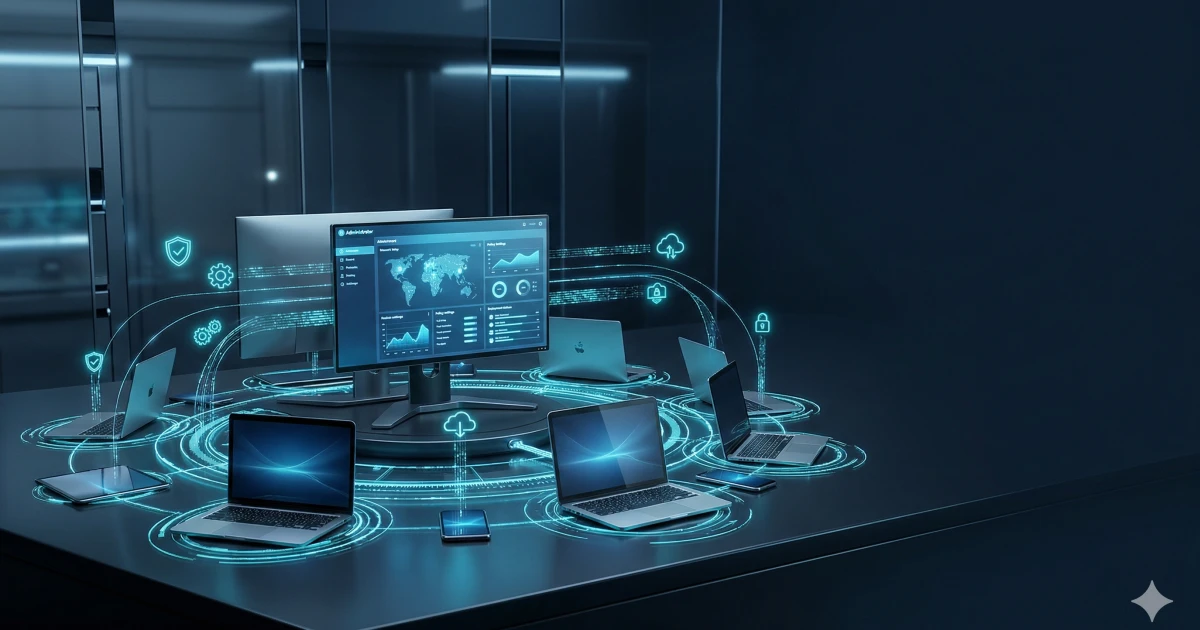
Device Management (MDM): Ultimate Guide for Teams | GoCo
Device Management (MDM) for remote teams. Secure devices, control access, and scale IT operations. Learn more 🔐
SEO Title: Device Management (MDM): Ultimate Guide for Teams | GoCo
Meta Description: Device Management (MDM) for remote teams. Secure devices, control access, and scale I.T. operations. Learn more 🔐
Device Management isn’t just about keeping laptops updated. It’s about maintaining visibility, security, and control as your business grows.
Most companies don’t lose control of their IT systems all at once.
A new employee joins remotely.
A laptop is shipped without proper configuration.
A device misses critical updates, and access is granted without structure.
Nothing breaks immediately. But over time, visibility disappears. And with it, control.
What is Device Management (MDM)?
Device Management (MDM) is the process of monitoring, configuring, and securing all devices connected to an organization’s I.T. environment.
This includes:
- Laptops
- Mobile devices
- Tablets
- Remote endpoints
MDM allows I.T. teams to manage these devices centrally, regardless of location. The goal is not just control, it's to be consistent.
Why Device Management Matters More for Remote Teams
In a traditional office, devices are physically accessible. In remote environments, they are not. This changes everything.
Each device becomes:
- A potential entry point for threats
- A point of failure for operations
- A variable that must be managed remotely
Without Device Management (MDM), organizations rely on assumptions:
- That devices are updated
- That security settings are applied
- That access is controlled
Turns out, these are just assumptions, that often fail.
The Risks of Unmanaged Devices
When devices are not properly managed, several risks emerge:
1. Inconsistent Security
Some devices may have:
- Outdated operating systems
- Missing security patches
- Disabled protections
This creates uneven security across the organization.
2. Lack of Visibility
Without MDM, I.T. teams often don’t know:
- Which devices are active
- Who is using them
- What their security status is
This lack of visibility limits decision-making.
3. Data Exposure
Unsecured or lost devices can expose:
- Client data
- Internal documents
- Credentials and access tokens
Device-level security is directly linked to data protection.
4. Inefficient Onboarding and Offboarding
Manual device setup leads to:
- Delays in onboarding
- Inconsistent configurations
- Missed steps during offboarding
This affects both productivity and security.
What Device Management (MDM) Actually Enables
A structured MDM solution brings control back into the environment.
1. Centralized Device Control
All devices are managed from a single platform whereI.T. teams can:
- Apply configurations
- Enforce policies
- Monitor device status
Location becomes irrelevant.
2. Automated Security Enforcement
MDM ensures that:
- Devices are encrypted
- Updates are applied automatically
- Security policies are consistently enforced
Security becomes standardized.
3. Remote Monitoring and Response
I.T. teams can:
- Detect issues in real time
- Respond to threats
- Troubleshoot devices remotely
This reduces downtime and operational disruption.
4. Structured Onboarding and Offboarding
With MDM:
- Devices are pre-configured before delivery
- Access is aligned with user roles
- Devices can be wiped or secured instantly when needed
Processes become predictable and controlled.
MDM and the Broader I.T. Environment
Device Management (MDM) does not operate in isolation. It is part of a larger IT and security framework that includes:
- Identity and Access Management (IAM)
- Endpoint Detection and Response (EDR)
- Cloud security configurations
- Monitoring systems
MDM connects these elements by ensuring that every device follows the same structure. Without I.T, even well-designed systems become fragmented.
Common Misconceptions About MDM
“We’re a small team, we don’t need I.T.”
Growth introduces complexity quickly. MDM prevents issues before they scale.
“Our employees manage their own devices.”
User-managed devices often lack consistency and security controls.
“We already use secure tools.”
Tools alone do not secure devices. Configuration and management do.
Why MDM Is Critical for Scaling Teams
As companies grow:
- The number of devices increases
- The diversity of environments expands
- The risk surface becomes larger
Manual management does not scale. Device Management (MDM) provides:
- Standardization
- Automation
- Visibility
These are the foundations of a stable I.T. environment.
Conclusion: In remote teams, the office is no longer a physical space. It’s every device your employees use. And every unmanaged device introduces uncertainty.
Device Management (MDM) replaces that uncertainty with control.
Because in modern I.T. environments, security and performance are not defined by where your team works. They are defined by how well your devices are managed.
Explore our latest LinkedIn articles, where we share practical insights on Managed I.T. Services, cybersecurity, governance, operational excellence, and the strategies helping businesses reduce risk and scale with confidence.
Because better decisions start with better understanding.
Good Company I.T.
GoCo
You are in Good Company