
Cybersecurity Architecture: How to Build Stronger IT | GoCo
Cybersecurity Architecture helps protect systems and data. 🔐 Learn security design principles and practical ways to strengthen your defenses with GoCo.
Adding more security tools does not automatically make a business more secure. If those tools operate independently, leave gaps between systems, or lack clear ownership, important risks can remain. Cybersecurity Architecture provides a structured way to connect security controls, technology, and business requirements into a coordinated approach to protecting your organization.
For small and mid-sized businesses, the goal is not to build the most complex environment. It is to establish the right protections for the systems, information, and operations that matter most.
What Is Cybersecurity Architecture?
Cybersecurity architecture is the design and organization of the technologies, policies, processes, and controls used to protect an organization's digital environment.
It defines how security measures work together across users, devices, networks, applications, cloud services, and data. A well-designed architecture helps businesses manage access, detect suspicious activity, respond to incidents, and recover from disruptions.
Rather than treating security as a collection of separate products, architecture considers how each control supports the broader security strategy.
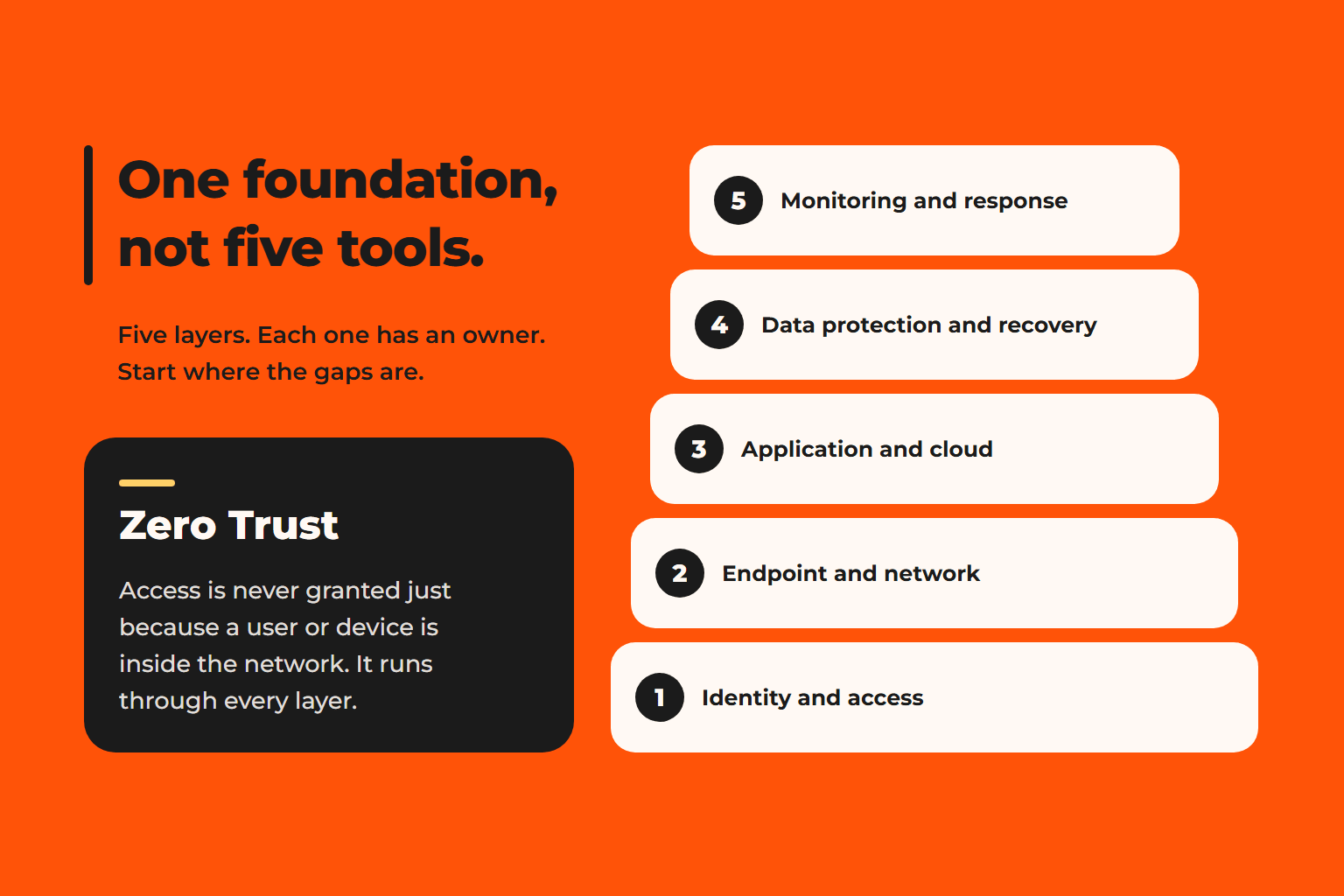
5 Core Components of a Strong Security Architecture
1. Identity and Access Management
Every user and service should have access appropriate to its role. Start with multifactor authentication (MFA), individual accounts, least-privilege permissions, and a documented process for granting and removing access.
Review privileged accounts carefully. Unnecessary administrative access can increase the impact of a compromised account.
2. Endpoint and Network Security
Laptops, servers, mobile devices, and network infrastructure are potential entry points for attackers. Maintain supported software, apply security updates, use endpoint protection, and monitor relevant activity.
Network segmentation can help limit unnecessary communication between systems. If one device is compromised, appropriate boundaries may reduce the attacker's ability to move to other parts of the environment.
3. Application and Cloud Security
Businesses increasingly depend on cloud platforms, collaboration tools, and third-party applications. Security architecture should account for how these services are configured, who can access them, and what information they process.
Review permissions, enable available security controls, protect administrative accounts, and assess integrations before connecting applications to sensitive systems.
4. Data Protection and Recovery
Identify sensitive information and determine where it is stored, who needs access, and how it should be protected. Use appropriate encryption, retention policies, and access restrictions.
Maintain backups that are protected from unauthorized changes and test restoration procedures regularly. Security architecture should account for recovery, not only prevention.
5. Monitoring and Incident Response
Security controls are more useful when the organization can identify and respond to suspicious activity. Centralized logging, relevant alerts, and documented escalation procedures can help teams investigate potential incidents.
Define who assesses an alert, who makes response decisions, and how systems can be isolated or restored when necessary.
How Does Zero Trust Fit In?
Zero Trust is a security approach based on the principle that access should not be granted solely because a user or device is inside a trusted network.
Instead, access decisions should consider identity, permissions, device condition, and context as appropriate. Verification and access controls are applied consistently across environments.
Zero Trust is not a single product. It is an architectural approach that can guide how organizations manage access to applications, infrastructure, and data.
How to Build Your Architecture Without Overcomplicating It
Start with an inventory of critical systems, important data, users, and external dependencies. Identify existing controls and determine where meaningful gaps remain.
Next, prioritize improvements according to business impact, risk, and available resources. A business may need to strengthen MFA and backup recovery before investing in more advanced monitoring capabilities.
Document system ownership, security responsibilities, and incident procedures. Review the architecture as your business adopts new applications, changes vendors, or expands its operations.
Build a Security Foundation That Works Together
A strong cybersecurity architecture connects practical safeguards into a coordinated system. It helps businesses understand their risks, assign responsibility, and make technology decisions with greater clarity.
GoCo helps businesses assess their IT environments, improve security practices, and plan technology changes around their operational needs. Talk to a GoCo specialist to identify gaps in your current security architecture and determine which improvements should come first.
The objective is not to add controls without a plan. It is to build a security foundation that supports how your business actually operates.
How Strong Is Your Cybersecurity Knowledge?
Knowing the basics is a great start, but how prepared are you to recognize common cybersecurity risks in your daily work? Put your knowledge to the test with GoCo’s interactive cybersecurity quiz and game. Explore common security scenarios, challenge your understanding, and discover where you may need to strengthen your approach. Take the quiz and test your cybersecurity knowledge today!
If you found this article helpful, be sure to visit our latest piece on our Blog for more insights.
Technology decisions shouldn't be based on trends; they should support better business outcomes.
Explore our latest LinkedIn articles, where we share practical insights on Managed IT Services, cybersecurity, governance, operational excellence, and strategies that help businesses reduce risk and scale with confidence.
Because better decisions start with better understanding.
Good Company IT
GoCo
You are in Good Company