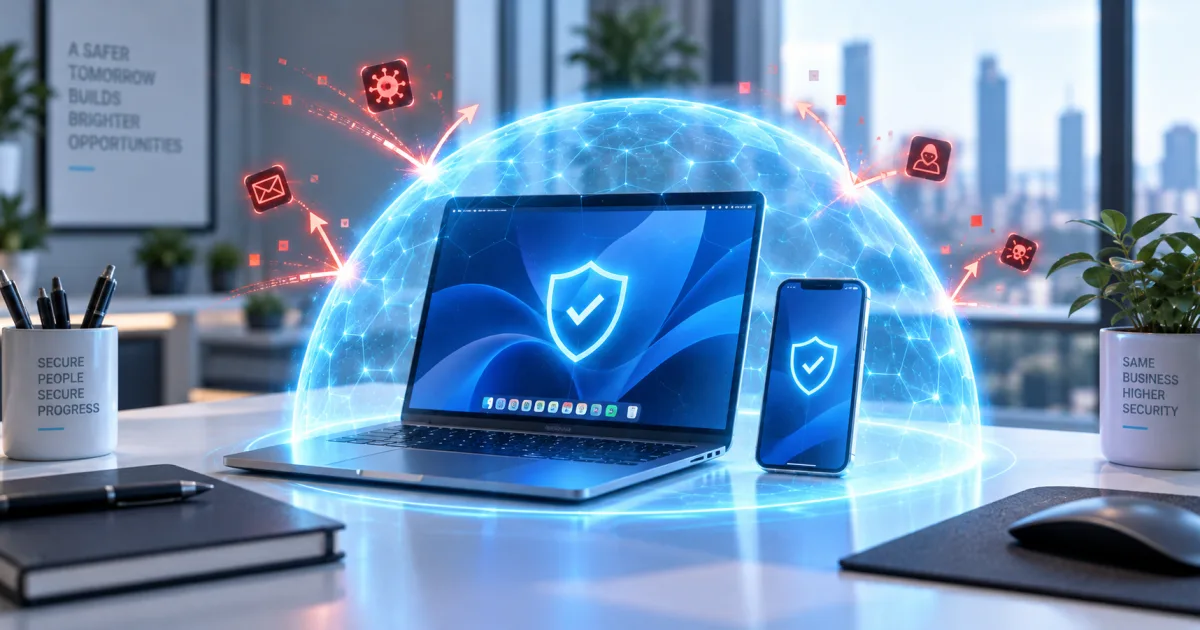
Endpoint Security: Best Guide to Protect SMB Devices | GoCo
Endpoint security protects SMB devices from cyber threats. Learn how endpoint protection, EDR, and device management reduce risk. 🔐 Learn more.
Your firewall is configured. Your cloud tools are secured. Your passwords follow policy. And yet, attackers still get in — how is that possible? Here's the uncomfortable question most small and mid-sized businesses avoid: what if your biggest security risk isn't your network, but the devices your people use every day? Laptops, phones, tablets, desktops — every one of them falls under EndPoint Security, and for SMBs, EndPoint Security is often the weakest link in the entire security chain.
In this article, we’ll explain:
- What endpoint security really means
- Why endpoints are so frequently targeted
- Where SMBs typically fall short
- What effective endpoint security looks like today
- And how to strengthen this critical layer without slowing teams down
What Is Endpoint Security?
Endpoint Security refers to the technologies, policies, and practices used to protect devices that connect to your organization’s systems and data.
Endpoints include:
- Employee laptops and desktops
- Mobile phones and tablets
- Remote and home-office devices
- Devices accessing cloud applications
- Any system that serves as a point of entry into your I.T. environment
Endpoint security focuses on:
- Preventing malware and ransomware
- Detecting suspicious behavior
- Controlling access
- Protecting data on the device
- Responding quickly when something goes wrong
In modern IT environments, endpoints are no longer “outside” the network. They are the network.
Why Endpoints Are the Weakest Link for SMBs
Large enterprises invest heavily in endpoint protection. SMBs often don’t—not because they don’t care, but because endpoint risk is easy to underestimate.
Here’s why endpoints are so vulnerable.
1. Endpoints Live Outside Traditional Perimeters
The old security model assumed:
- Users worked in offices
- Devices stayed on corporate networks
- Firewalls protected the perimeter
That model no longer applies.
Today:
- Work happens remotely
- Devices connect from anywhere
- Cloud tools are accessed directly
- Networks are fragmented
Endpoints operate beyond the firewall’s reach, making them harder to control and monitor.
2. Humans control Endpoints
Endpoints are where human behavior meets technology.
Common risks include:
- Clicking malicious links
- Downloading unsafe files
- Reusing passwords
- Using unsecured Wi-Fi
- Installing unauthorized software
Attackers know this. That’s why many modern attacks start with a compromised device, not a breached server.
3. SMBs Often Lack Endpoint Visibility
Many SMBs can’t confidently answer:
- How many devices access company systems?
- Are all devices encrypted?
- Are they patched and up to date?
- Who owns each device?
- What happens when an employee leaves?
Without visibility, security becomes reactive.
4. Endpoint Management Is Often Inconsistent
In SMB environments, it’s common to see:
- Personal devices mixed with company devices
- Different operating systems and configurations
- Inconsistent patching
- No centralized monitoring
This inconsistency creates gaps attackers exploit.
Common Endpoint Security Gaps in SMBs
Endpoint security issues rarely appear dramatic. They look small—until they compound. Common gaps include:
- Antivirus installed but never monitored
- Missing or inconsistent MFA
- Delayed software updates
- No device encryption
- No centralized device management
- No response plan if a device is compromised
Each gap alone may seem manageable. Together, they create significant risk.
Why Endpoint Security Matters More Than Ever
1. Endpoints Are Prime Entry Points for Attacks
Phishing attacks, credential theft, ransomware, and spyware frequently rely on endpoint compromise. Once a device is compromised, attackers can:
- Access cloud applications
- Steal credentials
- Move laterally
- Exfiltrate data
- Deploy ransomware
Endpoint security is often the first line of defense.
2. Cloud and Remote Work Increased Endpoint Risk
Cloud adoption reduced reliance on internal networks—but increased reliance on endpoints. When access is identity-based:
- Compromised endpoints = compromised access
- Security shifts from perimeter to device
This makes endpoint protection essential to cloud security.
3. Compliance and Client Trust Depend on It
Many security and compliance frameworks require:
- Secure device configurations
- Encryption
- Access controls
- Monitoring
Endpoints that aren’t protected properly can create compliance gaps—even if core systems are secure.
What Modern Endpoint Security Looks Like
Endpoint security today goes far beyond basic antivirus. An effective approach includes:
1. Endpoint Detection and Response (EDR)
EDR tools:
- Monitor behavior, not just files
- Detect suspicious activity
- Enable rapid containment
- Provide forensic visibility
This helps stop attacks that traditional antivirus misses.
2. Centralized Device Management
Device management allows I.T. teams to:
- Enforce security policies
- Push updates
- Control configurations
- Track device status
- Lock or wipe lost devices
Consistency reduces risk.
3. Patch and Update Management
Unpatched systems are one of the most common attack vectors. A strong endpoint strategy ensures:
- Operating systems are updated
- Applications are patched
- Vulnerabilities are addressed quickly
Automation is key here.
4. Strong Identity and Access Controls
Endpoints should work together with identity security:
- MFA enabled
- Least-privilege access
- Device-based access policies
Compromised credentials are far less useful when access is restricted.
5. Encryption and Data Protection
If a device is lost or stolen:
- Data should remain unreadable
- Access should be revocable
Encryption protects data even when devices are compromised.
Endpoint Security Without Slowing the Business
One of the biggest concerns SMBs have is productivity. Good endpoint security:
- Runs quietly in the background
- Automates enforcement
- Reduces user friction
- Prevents incidents before they disrupt work
The goal isn’t to lock things down—it’s to protect without interrupting.
Why Endpoint Security Requires Strategy, Not Just Tools
Installing software is easy. Managing risk is not.
Effective endpoint security requires:
- Clear policies
- Consistent processes
- Integration with I.T. and security strategy
- Ongoing monitoring
- Regular review
Without structure, tools lose effectiveness.
How GoCo Helps SMBs Strengthen Endpoint Security
At GoCo, we help businesses:
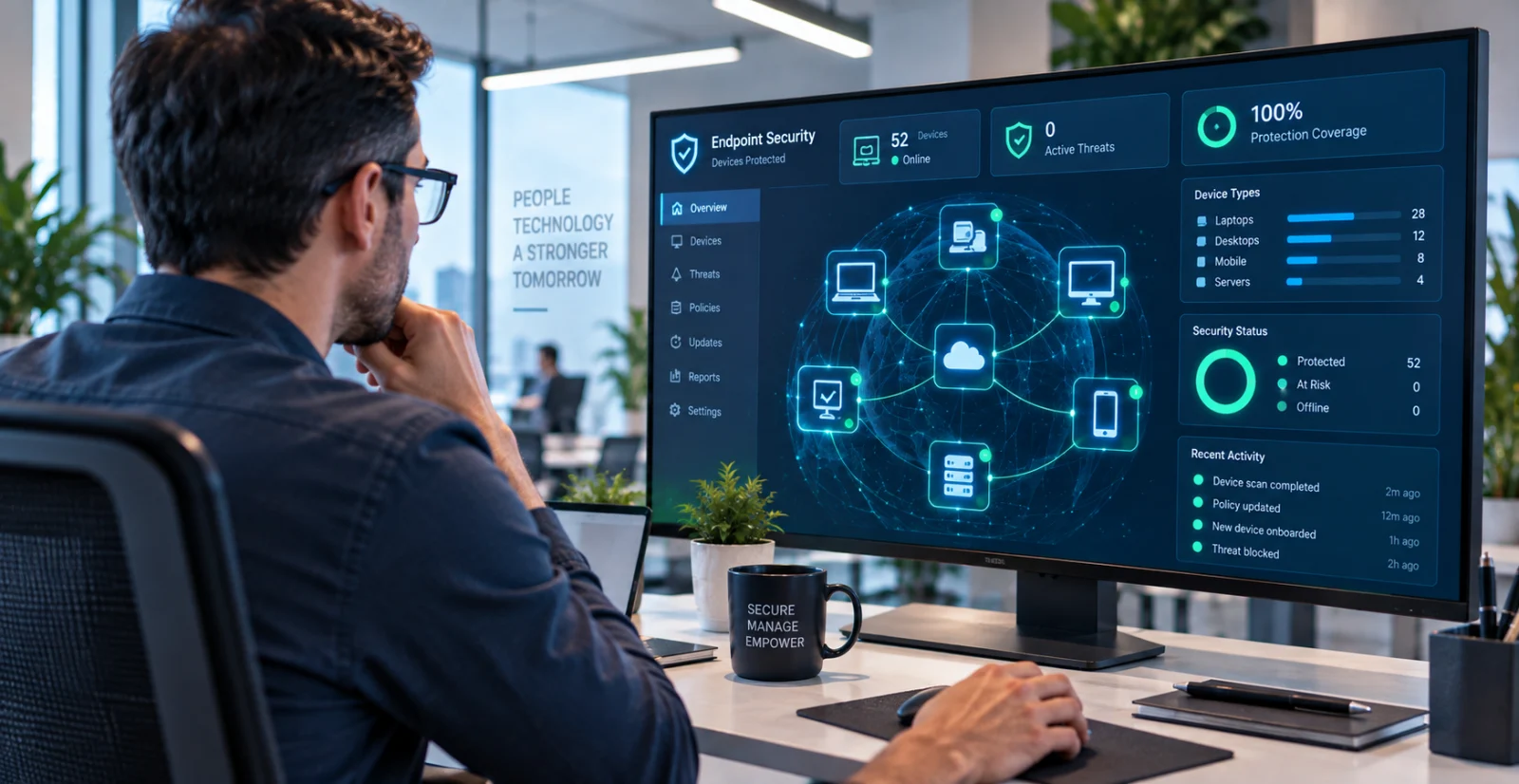
- Gain visibility into their devices
- Standardize endpoint configurations
- Implement EDR and device management
- Align endpoint security with cloud and identity systems
- Support secure remote work
Our approach focuses on clarity, consistency, and resilience—so endpoints stop being a liability and start becoming a strength.
Secure the Devices That Power Your Business
Endpoints aren’t a side issue.
They’re central to how modern businesses operate.
When endpoint security is weak:
- Security incidents increase
- Visibility disappears
- Risk spreads quickly
When endpoint security is strong:
- Threats are contained early
- Teams work confidently
- Growth becomes safer
If your business relies on devices, and it does, endpoint security deserves strategic attention.
You’re building your business.
We help you secure the devices that power it.
You’re in Good Company.
Technology decisions shouldn't be based on trends; they should support better business outcomes.
Explore our latest LinkedIn articles, where we share practical insights on Managed IT Services, cybersecurity, governance, operational excellence, and strategies that help businesses reduce risk and scale with confidence.
Because better decisions start with better understanding.
Good Company IT
GoCo
You are in Good Company