Cloud Security: Best Guide to Modern IT Protection | GoCo
Cloud security helps SMBs protect data and access. Discover cloud protection strategies for modern IT environments and reduce risk. ☁️ Learn more
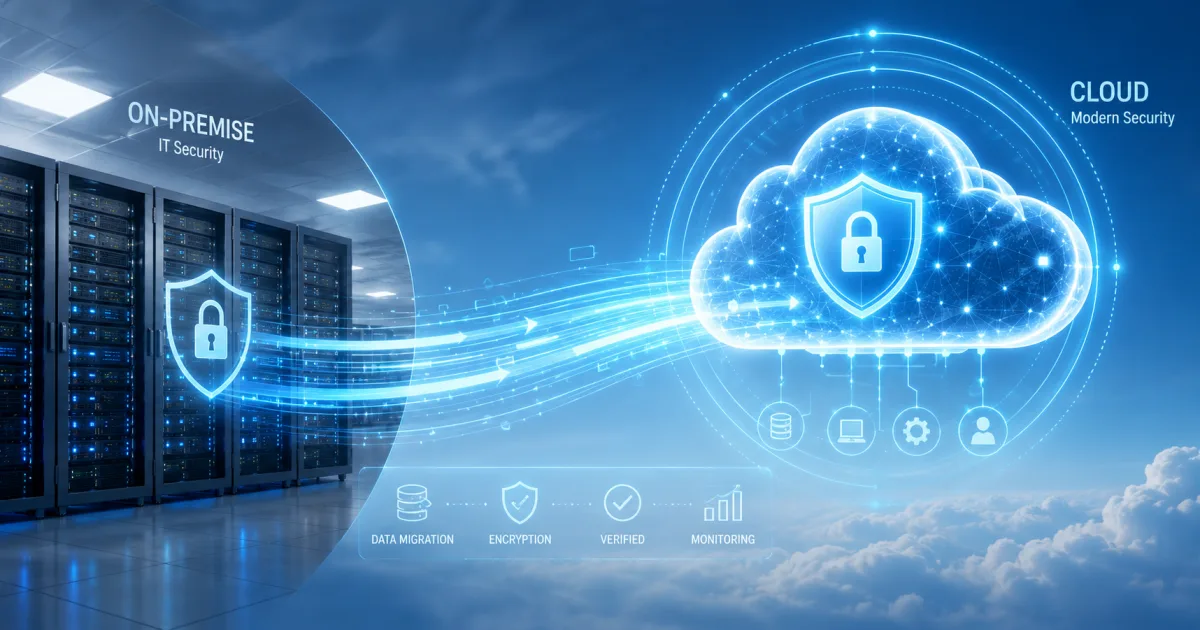
Imagine this: You’re in your office on a Tuesday morning, coffee in hand, running through emails. Everything feels under control—your servers are humming, backups are in place, and your firewall is doing its job. Then you get the message: “We’re migrating everything to the cloud.” Suddenly, your stable, familiar system feels like new territory. Cloud security becomes a new priority: Where is your data now? Who’s securing it? And do those old security protocols still apply?
You’re not alone in asking these questions.
As businesses move faster toward remote work, digital transformation, and cloud-based systems, many are struggling to understand what changes and what doesn’t when security moves off-premises.
So, let’s pull back the curtain.
Here’s what every modern business leader should know about cloud security vs. traditional I.T. security, and why it’s not just about where your data lives — but how it’s protected.
Let’s Start with the Basics: What Do We Mean by Traditional I.T. Security?
Before we talk about the cloud, let’s rewind a bit.
Traditional I.T. security, sometimes called on-premises security, refers to the practices and tools used to protect physical servers, networks, and hardware located within your company’s infrastructure.
Think:
- Firewalls at the office perimeter.
- Antivirus software on every desktop.
- Backup servers are sitting in a secure room.
- Manual patching and network monitoring by your internal I.T. team.
It’s a system designed for control and visibility; you own and manage everything.
The challenge?
As your workforce goes remote and your apps live in the cloud, that control becomes harder to maintain.
The “perimeter” of your network — once limited to your office walls — now stretches across homes, Wi-Fi networks, and personal devices.
That’s where cloud security enters the game.
What Exactly Is Cloud Security?
Cloud security is a modern approach to protecting data, applications, and infrastructure hosted on cloud platforms such as Microsoft Azure, Amazon Web Services (AWS), and Google Cloud.
Unlike traditional I.T. security, it’s not about protecting a physical server you can touch; it’s about protecting virtualized environments managed through shared responsibility.
The key difference:
You don’t own the infrastructure.
You share responsibility with your cloud provider.
Here’s how it typically works:
| Responsibility | Cloud Provider | You (the Business) |
|---|---|---|
| Physical security (data centers, power, cooling) | ✅ | ❌ |
| Network infrastructure | ✅ | ❌ |
| Data security and encryption | 🔄 Shared | 🔄 Shared |
| User access and identity management | ❌ | ✅ |
| App-level configurations and patching | ❌ | ✅ |
In other words, your provider secures the cloud, but you must secure what’s in the cloud — including access control, data management, and user behavior.
Why This Shift Matters for SMBs and Growing Companies
For many small and mid-sized businesses, the move to the cloud has unlocked new possibilities: flexibility, scalability, and cost efficiency.
But it’s also introduced new vulnerabilities that traditional security wasn’t designed to handle.
Let’s break it down:
Traditional I.T. Security Strengths
- Full control over hardware and data.
- Easier to customize and monitor local infrastructure.
- Offline operation (independent of cloud uptime).
Traditional I.T. Security Weaknesses
- High maintenance and hardware costs.
- Manual patching and updates create risk windows.
- Limited scalability and remote access challenges.
Cloud Security Strengths
- Built-in redundancy, automated updates, and real-time monitoring.
- Easier remote access for distributed teams.
- A.I.-driven threat detection and scalability.
Cloud Security Weaknesses
- Shared responsibility means misconfigurations can create risk.
- Insider threats and credential misuse are harder to detect.
- Compliance oversight can get complex if unmanaged.
The takeaway? Neither approach is “better,” but one is far more adaptable to today’s digital business environment.
The Myth of “More Cloud = Less Control”
One of the biggest misconceptions SMBs have about cloud security is the fear of losing control.
Cloud systems often enhance control when used correctly.
Modern cloud environments provide:
- Granular access control via Identity and Access Management (IAM).
- Encryption at rest and in transit.
- Integrated logging and alerting to detect unusual behavior.
In contrast, traditional setups rely heavily on your I.T. staff’s time and availability to monitor and respond.
Think of it this way:
In traditional I.T., your team is the night guard watching the gate.
In cloud security, you have A.I.-powered cameras, automated alarms, and a 24/7 global monitoring network backing you up.
You’re still in charge, you just have smarter tools.
The Role of Zero Trust: A Bridge Between Both Worlds
Whether you’re running on-prem, in the cloud, or hybrid, one principle now rules modern cybersecurity: Zero Trust.
Zero Trust operates under one simple assumption: “Never trust, always verify.”
That means every access request, whether from inside or outside your network, must be authenticated and authorized.
In traditional IT, Zero Trust may involve implementing strict VPN access and device compliance checks.
In Cloud Security, Zero Trust means using IAM tools such as Azure AD Conditional Access or Google BeyondCorp that continuously assess context (user, device, location, risk) before granting access.
The philosophy remains the same, but the implementation scales better in the cloud.
Compliance: Where the Cloud Often Wins
For small businesses managing sensitive data (think healthcare, finance, or retail), compliance frameworks like HIPAA, SOC 2, or ISO 27001 can be intimidating.
Here’s the good news:
Most major cloud providers bake compliance readiness into their platforms.
For example:
- AWS and Azure are already SOC 2-, ISO 27001-, and GDPR-compliant.
- Google Cloud offers built-in compliance dashboards for audit reporting.
That doesn’t mean you’re off the hook; your business still must configure, monitor, and maintain compliance within your applications.
But leveraging these built-in frameworks dramatically reduces cost and complexity, especially for small teams.
The Real Risks: Misconfiguration and Human Error
Here’s where most cloud security failures happen, not in the provider’s infrastructure, but in how businesses set it up.
Research consistently shows that over 60% of cloud breaches result from misconfigurations.
That means permissions left too open, data stored unencrypted, or default credentials not changed.
Common examples:
- Publicly exposed AWS S3 buckets containing sensitive data.
- Overly broad user permissions in Azure.
- Misconfigured firewalls in Google Cloud.
Traditional I.T. has its share of human error, too, but in cloud environments, a single configuration slip can expose global access.
That’s why automation and governance policies are key — they enforce consistent, secure configurations without relying on memory or manual review.
Hybrid Environments: The Best (and Worst) of Both Worlds
Most businesses today aren’t fully in the cloud or fully on-premises.
They operate in a hybrid environment — where some workloads live on servers and others in the cloud.
This setup allows flexibility but introduces complexity.
Challenges of Hybrid Security
- Two separate systems for security and monitoring.
- Different tools, logs, and compliance requirements.
- Increased attack surface due to multiple connection points.
Solutions
- Use centralized monitoring platforms (e.g., Microsoft Sentinel, Splunk).
- Standardize policies across both environments.
- Implement unified identity management (SSO, MFA, IAM).
The right MSP partner can help bridge that divide — ensuring your data remains secure wherever it lives.
The Economics of Security: Why Cloud Can Be More Cost-Effective
Let’s talk about ROI — because at GoCo, we know every dollar counts.
Traditional Security Costs Include:
- Hardware (servers, firewalls, backup systems).
- Energy and maintenance.
- On-site IT staff for updates and monitoring.
Cloud Security Costs Include:
- Subscription-based tools.
- Pay-as-you-go models for storage and compute.
- Optional managed services for monitoring and compliance.
While cloud costs can add up, you’re not paying for idle hardware, downtime, or surprise equipment failures. Plus, you gain elastic scalability, paying only for what you use.
It’s the difference between owning a car and using rideshare: the control is different, but so are the costs, flexibility, and responsibilities.
How MSPs Like GoCo Simplify the Transition
Transitioning to a secure cloud environment doesn’t have to be a solo journey.
Managed IT Providers (MSPs) like GoCo help growing companies:
- Assess current infrastructure and security posture.
- Design secure hybrid or cloud-only architectures.
- Configure identity and access management.
- Monitor compliance and respond to threats in real time.
- Train employees on new tools and policies.
Instead of hiring a full IT department, you gain an expert team on demand, helping you scale securely and affordably.
The Future of Security: Adaptive, Automated, and Everywhere
The line between traditional and cloud security is disappearing.
Modern IT environments require both local resilience and cloud intelligence.
Expect the next wave of innovation to focus on:
- AI-driven security orchestration (automating threat response).
- Edge computing security (protecting devices outside data centers).
- Continuous compliance automation.
For small businesses, this means more accessible enterprise-grade protection — without enterprise complexity.
Control isn’t about location; it’s About Visibility
The biggest takeaway? Security today isn’t defined by where your data lives — it’s defined by how you manage and monitor it.
Cloud security isn’t replacing traditional IT security. It’s evolving it.
Businesses that combine the visibility of on-prem with the automation of cloud will lead the next generation of secure, scalable companies.
Because real security isn’t about locking everything down, it’s about keeping your business moving safely, wherever it goes next.
Secure the Future, Without Slowing Down
At GoCo, we help businesses transition securely from traditional IT to modern, cloud-ready environments. From audits to automation, we make your systems safer, smarter, and ready to grow.
👉 Let’s build your cloud security roadmap, together.
Because your business deserves the confidence to innovate securely.

Technology decisions shouldn't be based on trends; they should support better business outcomes.
Explore our latest LinkedIn articles, where we share practical insights on Managed IT Services, cybersecurity, governance, operational excellence, and strategies that help businesses reduce risk and scale with confidence.
Because better decisions start with better understanding.
Good Company IT
GoCo
You are in Good Company